


Many parents are eager to start their children on violin lessons for kids. During my many years of tenure in the music education niche, sometimes I am approached by enthusiastic parents who ask if their two year old child can enrol to start to learn to play the violin. Typically, I would advise the parent to wait till the child is three to five years old before exploring this. There are a few key reasons for this:
Firstly, the child may not have grown up physically to be able to hold the violin and bow to play effectively.
Secondly, the child may not have developed mentally to understand simple concepts such as counting and reading.
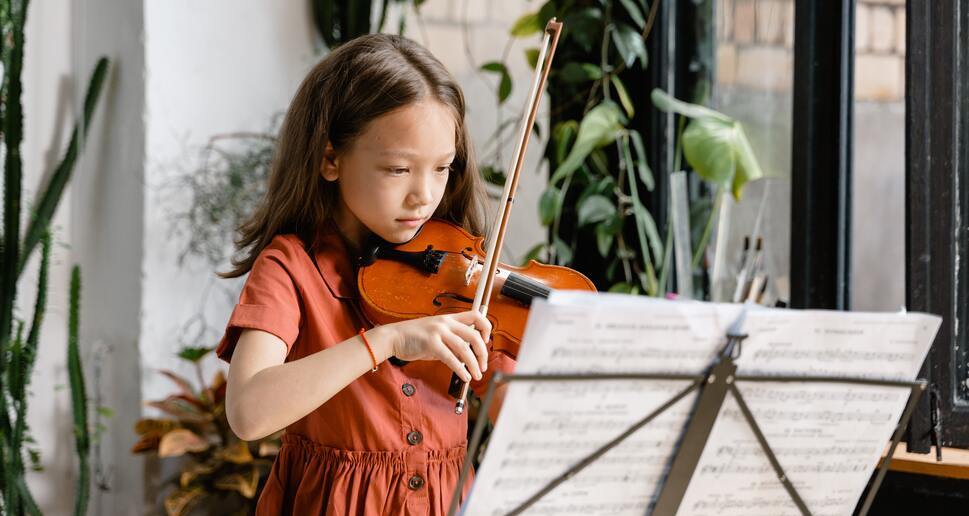
So my advice to parents of children who are younger than five years old, is to expose the child to music by playing classical songs. Encourage the child to get basic sense of rhythm, as well as sing or hum along to simple songs. There are many simple songs such as “Twinkle Twinkle Little Stars” or “Row Row Row your boat” or “London Bridge is Falling Down” which can be taught at this age. This will help to program the young mind to be ready to start formal violin classes for kids later.
Now, let me share with you six benefits of starting your child on violin lessons for kids:
Violin lessons requires the student to focus for at least 30 minutes to an hour, listening and internalizing what the coach is explaining. The child’s concentration and attention span will be very much improved. This is functional toward the ability to learn new things in life, whether academically or otherwise. Which leads us to benefit number 2.
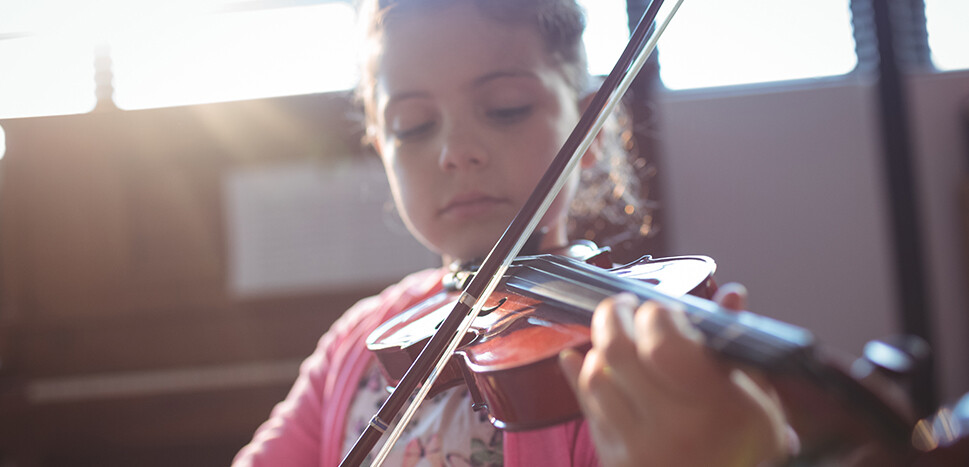
I have noticed that children who embark on violin lessons for kids at a young age tend to do better academically. The brain is a very unique and interesting organ. At a young age, it can absorb knowledge like sponge. Even in adulthood, the mind can be altered via repetitive practice, so that the brain neurons can reconnect and slow down the degeneration of the brain cells. This is another topic altogether.
On the topic of connecting brain neurons to physically challenge the student to play the violin — this is the process of mind mapping. In other words, repetitively practice so that the movement or technique becomes easy. The violin player does not need to think to coordinate both hands to play the violin. So another key benefit of violin classes for kids is improving the visual space processing of the mind. Some term this “motor skills development”. The child will gain directional sense, meaning for example, if the child goes for a walk from him, he or she will not get lost as the mind know where the starting point is.

Another benefit of music lessons for kids is it develops discipline and patience. In the process of mind mapping, the violin student will find that the hand, eye and brain cells cannot coordinate. It is important here, to be patient and not get frustrated. Frustration will slow down the learning process. Starting music lessons also requires the student to be disciplined about daily practice. I always advise my students to make it a point to come into contact with the violin and violin bow on a daily basis, no matte how busy one might me. Ten minutes of mindful practice is better than two hours of mindless practice which is not productive.
Starting music lessons also stimulates the child creativity. How, you may ask? In playing any repertoire pieces, whether short or long ones, one is playing music. Music is emotional — the song could be the famous “Swan Song” which is sad and soulful, or it could be Vivialdi’s four seasons where certain sections are full of positive happy energy. All these emotions need to come out when the violinist plays the piece, and to do that, I advise my students to imagine what is happening in the song, and play to emote based on the imagination. This certainly helps in improving one’s creativity.


A professional level violin teacher, Joanne graduated from Northeast Nornal University (Chang Chun of China) in 2001, attaining Bachelors degree in music teaching. She is also familiar with the ABRSM (Associated Board of Royal School of Music) and Trinity exam board grading system, having attained ABRSM.grade 8 (Distinction) in 2006, In 2020, she graduated from NAFA (Nanyang Academy of Fine Arts) obtaining music diploma in teaching.

Local violinist, Clement Lim has been teaching in Singapore as a full time violin instructor since 1995.
Born in 1972, Mr. Lim started his journey in practical violin at the age of 8. He had received his violin training with several renowned violinists. Among were Pavel Prantl (first SSO concertmaster); Chua Lik Wuk; Kong Zhao Hui – members of SSO. Lynette Lim.
Kevin began to learn violin at the age of 9 and started off as a CCA under Michael Tong. He has also went through the tutelage of renowned SSO members Wu Man Yun, Foo Say Ming and Nikolai Koval.
He has achieved a Distinction in Grade 8 ABRSM exam and went on to participate in numerous competitions where the most notable one is achieving Gold standard in the Singapore Performers Festival.
After serving his National Service, Kevin attended the Diploma and Degree from the Nanyang Academy of Fine Arts (NAFA) where the Degree programme was in collaboration with RCM (Royal College of Music) and was under the tutelage of Professor Michal Cwizewicz.
To further hone his techniques and interpretations, he attended masterclasses held by Chua Lik Wuk, Lynette Lim and Zhao Tian.
Kevin currently holds the Bachelor of Music (Hons) and even took the DipABRSM exam. He is able to teach repertoires to any level and explores not just classical music, but jazz repertoires as well. He also holds a Grade 8 certification in Music Theory where most of his students achieved Distinction in their Grade 5 exam.
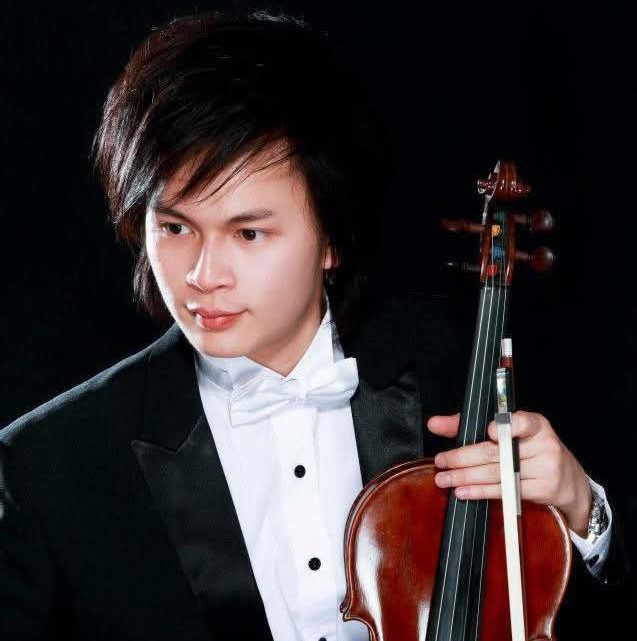
Jameson is a passionate Violin Teacher and Viola Performer with more than a decade of teaching and orchestral experience. He is committed to nurturing young musicians, helping students build a strong musical foundation while enjoying the learning process.
He graduated with a Bachelor’s Degree in Viola Performance from the National Taiwan University of Arts, and also trained at the University of Central Arkansas. His diverse international musical background allows him to bring unique insights and inspiration to every lesson.
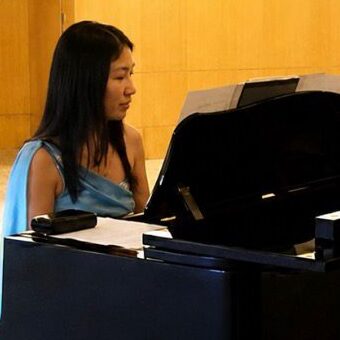
Kendra is an experienced multi-instrumental music educator with more than two decades of teaching experience. She began teaching piano in 2002 and subsequently expanded her teaching to violin, viola, guitar, cello, ukulele, drums, erhu and guzheng.
Her formal music qualifications include a Performer’s Certificate in Solo Piano, ABRSM Grade 8 Violin, ABRSM Grade 8 Music Theory, ABRSM Grade 5 Cello and Trinity College Grade 5 Guitar. She is also proficient in viola, ukulele, drums, erhu, guzheng and harp. She has extensive experience teaching cello and has successfully prepared students for ABRSM Cello examinations up to Grade 8, with students achieving Merit.

Tevy graduated from La Salle Singapore & Kingston University (DIP. BA in violin music performance, Hons upper 2nd Division) in 1998. He also has piano as minor study for his Dip. BA. He has 9 years of solid coaching experience with private students as well as in music schools.
Tevy’s appreciation of western classical music originated from his coaches from Singapore and UK. Notably, he took master classes from Mr Jonathan Rees (a recipient of the BBC Award violinist in 1978).
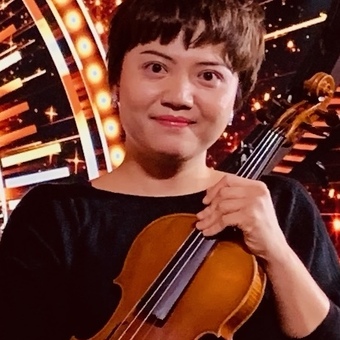
Elaine achieved Masters Degree in from the Hong Kong Academy for Performing Arts (2011). Prior to that, she attained a professional diploma in the Hong Kong Academy for Performing Arts (2004) as well as Bachelor in Music from Xing Hai Conservatory of music (Guang Zhou, China).
Her performance experience with Global Symphony Orchestra (Mak Ka Lok -2018-2021) includes highlight performances such as: New Year’s Concert on CCTV in January 2020 (Filmed in Shenzhen with Macau Orchestra, Shenzhen Symphony Orchestra, and Guangzhou Symphony Orchestra), World Symphony Concert: Fur Elise (October 2021), Peace concert in Hong Kong (November 2019), Concert in Shanghai for 12th China Art Festival (May 2019), Concert in Vienna for Austrian Music Theatre Honorable Prize (June 2018), “All About Love” Concert in Hong Kong String Orchestra Jockey Club Power of Music Programme (April 2020) , Tutti violin Hong Kong String Orchestra (Yao Jue, 姚珏, 2016-2022, Tutti violin I: HKFW Six Arts Orchestra (2013-2022), guest violinist with City Chamber Orchestra & Hong Kong Virtuosi Orchestra (2009-2022).

Violin student

Violin student

Violin student

Violin student

Violin student

Violin student
.jpg)
Adult cello student

(72 year old cello student)

Cello student

Adult violin student

Adult violin student

Student
Some children are cognitively and physically ready to start violin lessons from age 3. However, most violin teachers prefer to coach children age 5 to 6 onwards as they can better concentrate over a lesson time span of 30 minutes to 45 minutes. If you are not sure if your child is ready to start violin lessons, contact Stradivari Strings at +65-98137769 (call or whattsapp) to arrange an assessment session.
To accelerate your child’s progress on the violin, you can start violin lessons with your child. Learn from the violin teacher what is taught during each weekly violin lesson for kids, and practice daily in between lessons with your child. As a bonus, you can use this as parent – child bonding time.
The price range for fractional size violin for kids ranges from $150 to $500, depending on the size of the violin, and whether the violin is factory made or hand crafted. You should also budget for accessories including the shoulder rest, violin mute, music stand and books. For a one-stop-shop experience, come to Stradivari Strings to select your child’s violin. Alternatively, we can deliver the violin to you with delivery fee.
In general, the size chart for fractional violin (by age) is as follow:
Age 3 to 5 years old — 1/16 size
Age 5 to 7 years old — 1/8 size
Age 7 to 9 years old — ¼ size
Age 9 to 11 years old — ½ size to ¾ size
Age 11 and older — ¾ size to 4/4 size
The above is an indicative size chart. It is best to bring your child to our shop at Stradivari Strings, so that we can correctly measure your child for the correct size violin.
With the right positive attitude, strong parental guidance as well as an experienced violin teacher who know how to structure the violin lesson for kids in an interesting manner, your child should find learning to play the violin a breeze.